Brussels, Belgium
+32(0)2 230 30 70

About

Background

The Fisheries Expert Group of the IUCN Commission on Ecosystem Management (IUCN/CEM/FEG, in brief FEG) was established during the IUCN World Congress in Barcelona in 2008 at the initiative of the European Bureau of Conservation and Development (EBCD) and with the support of the IUCN Global Marine Program. The scientific Expert Group has global expertise on the Ecosystem Approach to fisheries and conservation and addresses the need for an ecosystem-focused competence on marine fishery and conservation issues within the IUCN Commission on Ecosystem Management (CEM).

EBCD provides the Secretariat of FEG and its Director ensures the coordination.

Mission

 ­

The mission of FEG is to work at the interface between fisheries management and marine biodiversity conservation, fostering the sustainable use of fisheries and promote the conservation of related marine ecosystems. To fulfil this mission, FEG seeks to inform fisheries and marine conservation policies and related strategies and approaches and to provide a bridge between the two governance streams, facilitating their convergence.

FEG intends also to provide a link between the fishery and biodiversity expert communities of IUCN.

In pursuing its objectives, FEG links as appropriate with other IUCN Commissions such as the Species Survival Commission (SSC) (particularly with its Marine Conservation sub-Committee and the Fisheries Experts Group of the ESUSG), with the Commission on Ecological, Economic and Social Policy (CEESP) and the World Commission for Protected Areas (WCPA).

Activities


FEG organises scientific debates and meetings on key issues at the interface between fisheries and conservation. It produces and contributes to publications, books, articles, policy briefs, supported by desk studies and syntheses of available knowledge.

Pool of experts


FEG draws part of the expertise it needs to answer the broad range of questions from its Pool of Experts. The pool is a database of experts selected by the FEG Bureau for their expertise that have been either proposed formally to IUCN/CEM or have applied directly.

To become a FEG member


The minimum requirement to apply for the pool is to have at least 10 years of experience in issues related to fisheries management and /or biodiversity conservation and a good degree of familiarity with the functioning of the related international organisations (e.g. FAO, IUCN, CBD, CIES, UN, etc.)

Applications can be sent to despina.symons@ebcd.org with a detailed CV and list of publications.
About the MEP Group

Who we are, our history, our structure

Image link

Who we are

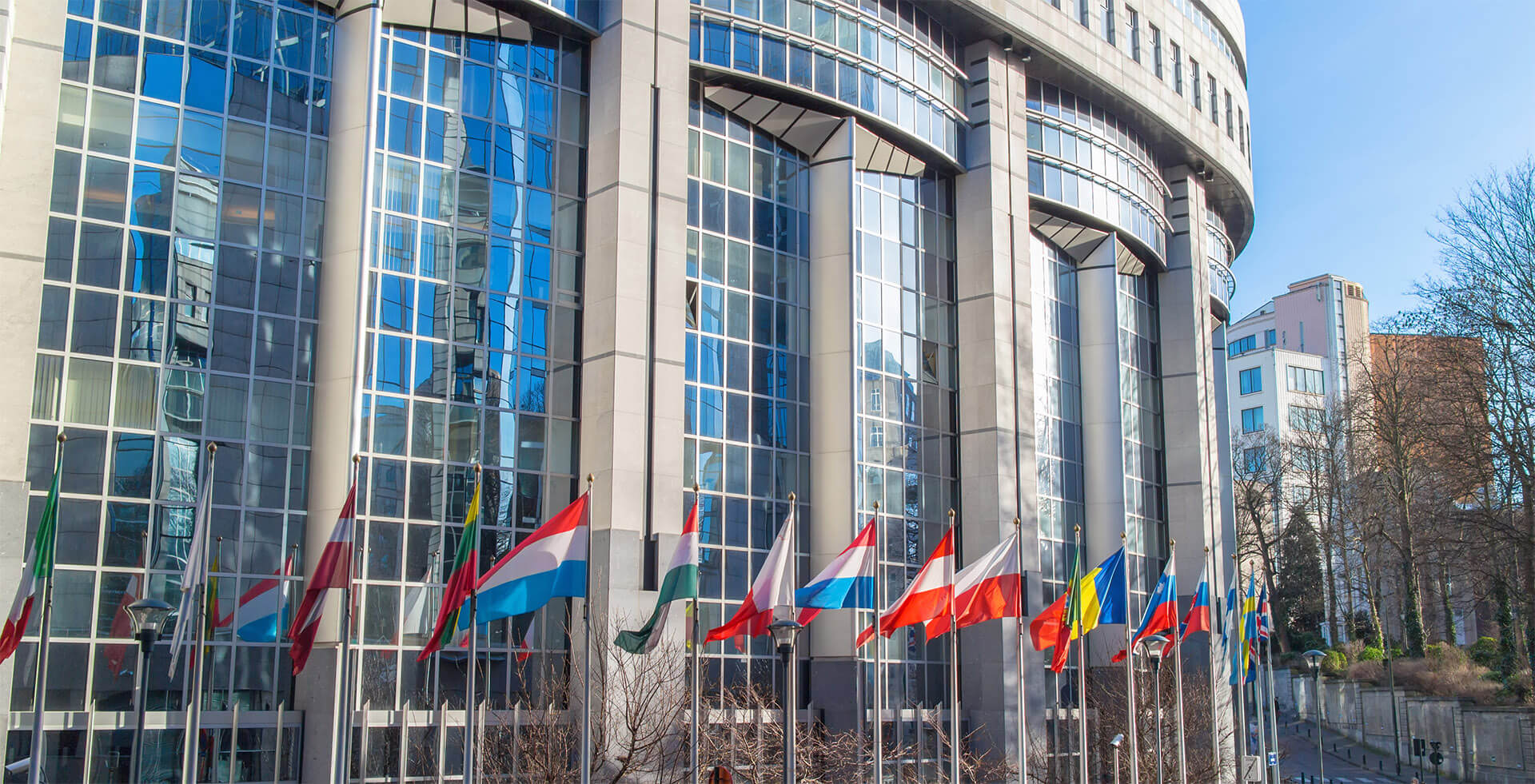
The MEP Group on ‘Climate Change, Biodiversity and Sustainable Development’, formerly known through its 30-year history as an Intergroup under the same name, brings together Members of the European Parliament (MEPs) from all political groups and Parliamentary Committees to find sustainable solutions to some of the greatest challenges of our time. This balanced forum of discussion allows MEPs to listen, debate and shape ideas and policies based on contributions from the different stakeholders (relevant experts, NGOs, private sector, researchers and academics) in the presence of the European Commission, EU Presidency, and EU Member States. During the 2024–2029 parliamentary term, this platform will concentrate its efforts on six key areas: sustainable food systems, water resilience, circular economy & bioeconomy, sustainable forest management, clean energy & transport, and ocean governance, all guided by the slogan ‘People, Planet, Prosperity’.

Please click here to find out more about our manifesto for the 2024-2029 mandate.

Our history­­­­

Established in 1994 at EBCD’s initiative with the support of IUCN, the European Parliament Intergroup on Climate Change, Biodiversity and Sustainable Development has been one of the most important and influential Intergroups in the European Parliament for over 30 years. It has been a vital forum fostering dialogue between policy-makers, stakeholders, and relevant key experts on environmental issues to achieve balanced, science-based policies, that encompass the economic, social and environmental pillars of sustainable development.

Continuing its work as an MEP Group within the 2024-2029 mandate, this platform will keep promoting well-informed policy-making, encouraging innovation, and building partnerships, via facilitating cross-political group discussions and cross-sectoral dialogue. Prioritizing engaging with those most affected by the upcoming legislations, the MEP Group notably benefits from the input of an Advisory Group composed of representatives from EU institutions and agencies (CoR and EEA), IUCN, and United Nations bodies (UNEP and FAO), as well as members from European associations, and environmental organizations.

Structure of the MEP Group

  • 3 Co-Chairs: MEP Dimitris Tsiodras (EPP), MEP Nicolás González Casares (S&D) and MEP Elsi Katainen (Renew).
  • 6 Working Groups:
    • Sustainable Food Systems 
    • Water Resilience 
    • Circular Economy and the Bioeconomy
    • Sustainable Forest Management
    • Ocean Governance 
    • Clean Energy and Transport
  • 8 cross-cutting themes: Health, Technology & innovation, Resilience & disaster management, Youth, education & awareness, Sustainable finance, Gender equality, Cultural diversity, Regional & local considerations.
  • The Official Bureau of the MEP Group is formed by the Chairs and the Vice-Chairs who have top decision-making powers.
  • An Advisory Group represented by MEP Group’s stakeholders advises the Secretariat and the Bureau.
  • The Secretariat of the MEP Group deals with logistical issues, and supports the MEPs’ work. 
  •  

The Working Groups

  • Sustainable Food Systems
  • Water Resilience
  • Circular Economy and the Bioeconomy
  • Sustainable Forest Management
  • Ocean Governance
  • Clean Energy and Transport


Members of the Advisory Group

 
  • IUCN (International Union for Conservation of Nature)
  • UN Environment (United Nations Environment Programme)
  • FAO UN Brussels (Food and Agriculture Organization of the United Nations)
  • CoR (Committee of the Regions)
  • EESC (European Economic and Social Committee)
  • EEB (European Environmental Bureau) 
  • CEPF (European Confederation of Forest Owners)
  • EUSTAFOR (European State Forest Association)
  • EUBA (European Bioeconomy Alliance)
  • EurEau
  • Eurodom
  • ACR+ (Association of Cities and Regions for Sustainable Resource Management)
  • Cepi (Confederation of European Paper Industries)
  • Europêche (Association of National Organizations of Fishing Enterprises in the EU)
  • EEA (European Environment Agency)
  • IEEP (Institute for European Environmental Policy)

  • FEAP (Federation of European Aquaculture Producers)
  • EPO (European Pet Organization)
  • PET EUROPE (PET Europe Producers’ Association
  • SfPE (Steel for Packaging Europe)


World Environment Day 2023


The EP Intergroup mid-term video for the 2019- 2024 mandate


 The Intergroup priorities for 2019-2024

The European Parliament Intergroup on ‘Climate Change, Biodiversity and Sustainable Development’ has brought together for more than 25 years Members of the European Parliament from all political groups and Parliamentary committees, with the objective of finding sustainable solutions to some of the greatest challenges of our time. Please find more about EP Intergroup’s policy priorities for the 2019-2024 mandate here, as well as more information about the EP Intergroup’s mission and vision in the video below.