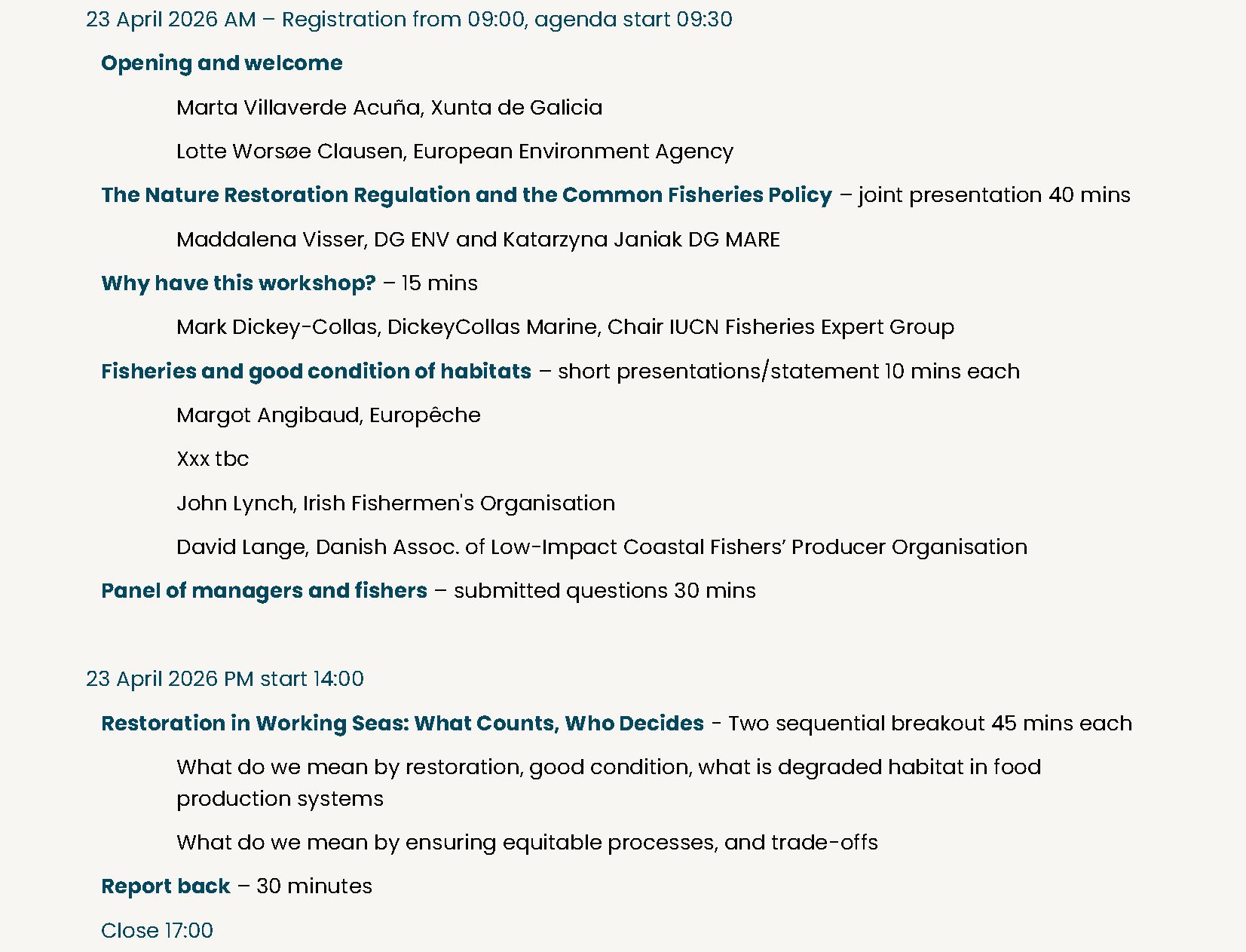
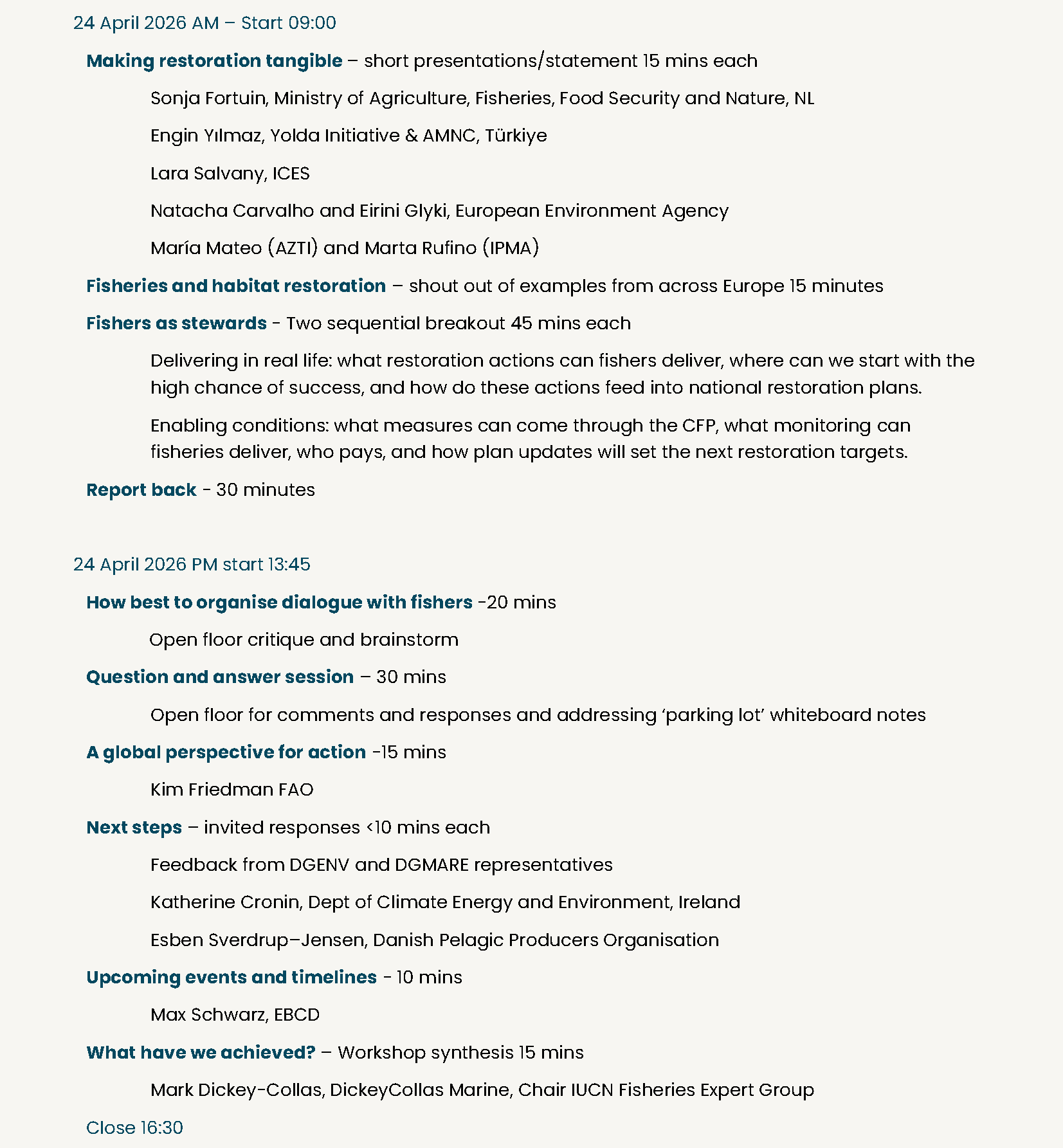
Fisheries knowledge and management tools are essential to delivering marine restoration on the ground. This workshop positions fisheries as active contributors to habitat recovery and clarifies how fisheries management can support the EU Nature Restoration Regulation (NRR) implementation through practical, workable measures.
Background:
Marine habitat restoration is moving from ambition to implementation under the EU NRR. Across Europe, fisheries are helping to improve and restore marine habitats through management measures, gear choices and spatial planning. These actions support healthier seabeds, resilient stocks and long-term food production.
The NRR now creates a clear framework to recognise and strengthen these contributions. Where fishing interacts with habitat condition, restoration measures will be developed through the Common Fisheries Policy. This makes fisheries central to how restoration is designed and delivered at sea.
Why participate?
This workshop focuses on how fisheries can continue to contribute positively to restoration, while remaining viable and productive. The emphasis is on solutions that can be implemented in practice.
The workshop will explore ways fisheries can support and deliver habitat restoration under the NRR. This includes productive fishing grounds, mixed-use areas and working seascapes, not only protected sites. Fishers, fisheries managers and national NRR planners will share experiences to identify measures that build on existing fisheries management, reduce pressure where needed, and enhance ecosystem functions that fisheries depend on.
Participants will be asked to share examples of fisheries contributing to habitat recovery, clarifying how fisheries management can support NRR targets. The aim is to co-develop proportionate measures that strengthen stock resilience, seabed integrity and habitats.
Who should participate?
The workshop is aimed at fishers and fisheries organisations, national fisheries authorities, NRR planners and environmental authorities and those working at the fisheries–restoration interface.
Whilst participation in the workshop will be in person only, it will be possible to follow plenary discussions online.